


Created: April 28, 2026 at 8:57 AM
Any pocket-sized criticism an artist would be so lucky to receive should come from a critic with actual, real-life eyeballs with the ability to see… or, more inclusively, have the ability to experience artwork in some real sensory way. More exclusively, yeah, art critics should have a pulse, and, while we are at it, a spine.
Opinion: Artists don’t need an art critic in their pocket.
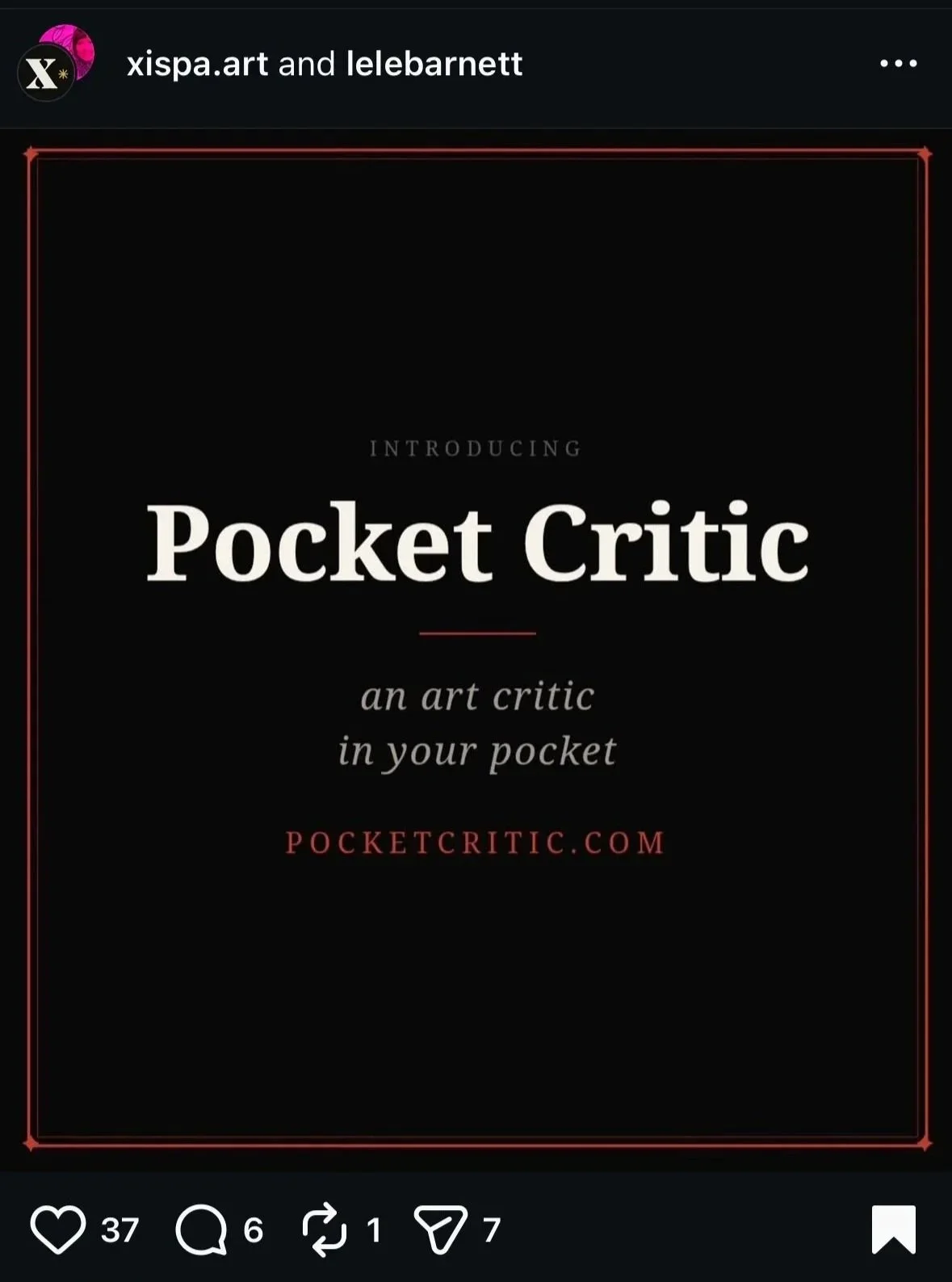
I wake up April 28th, and as I do every morning, the first thing I do is open two gifts, otherwise known as my eyes, a privilege to use everyday, and with my well-rubbed eyes, what do I do first with them? Open my phone. An unfortunate habit I am working to untether, but that won’t happen on this day. On this day, I mindlessly navigate through my still-blurry sight to Instagram and scroll almost immediately onto this post. I phone a friend:

I had begun to follow Xispa when the buzz reached me through a post from an artist I follow, Susan Robb, who is soon to be participating in the new Art-Tech residency. In need of more information, I went further online. “Xispa is an art innovation lab, residency, and exhibition space where artists and technologists experiment with ideas that don't fit traditional museums or galleries.” I remember seeing this article by Amanda Manitach on my social feed as well, introducing the new opportunity that spawned from Doug Carmean and Lele Barnett’s leadership of the ART (Artists, Researchers, and Technologists) and Expansive Thinking program at Meta Reality Labs Research. I knew Portland Artist Samantha Yun Wall was also invited to be one of the first Artists in Residence, and I am truly looking forward to the work she will create and enhancements in her process as she works to develop “nanoparticle ink” — whatever that means, I am into it; I am following along.
I must have glossed over Manitach’s mention of Xispa developing a “pocket critic—modeled after a well-known critic, able to generate custom critiques from uploaded images,” because the guttural emotions brought up over the Instagram post were disorienting; now I am not following along!
As somebody who obsessively writes and talks about art, even though I’m not regularly putting out writing like I used to, this felt out of touch. And talk about paradoxical, Carmean was one of 1,000 people laid off due to the shift many companies are making to AI, as reported by Manitach. I just do not understand. As an empathetic person yes I can rationalize perhaps the symbolic power Carmean yields by utilizing AI in spite of the role AI usually plays. I understand the multifacetedness of AI and the hypocrisy innately embedded in criticizing something that underpins the very devices we use to keep up with our lives. However, I didn’t ask for this.
I am going to be very candid about my line of reasoning as it came to me after seeing this post. It goes like this: if there is funding to create a program like the Pocket Critic, isn’t there funding to pay some actual art writers to have a conversation with artists in person? Couldn’t there be funding to host critiques and mediated conversations about topics like the effects of AI and the seemingly-endlessly mentioned “intersection of art and technology”? Maybe it’s the lack of art criticism here in Seattle (don’t even get me started on this) that further negates the necessity of this program to Xispa. Yet, there are plenty of other figures — professors, art administrators, curators, etc — who use critical thinking skills every day to create art experiences that I would choose every time to talk about my work over AI. In fact, I am kind of desperate for it. Like, I would pay for a review. Oh, and I do! RIGHT HERE if you submit your writing about art in your orbit.
I think of this post from Charles Mudede I also saw recently:

This is Pacific Place mall as of now, a massively heinous screen replacing "Murmuration," a 60-foot tall suspended art sculpture with over 2,100 individual acrylic spheres, created by local artist Susan Zoccola.
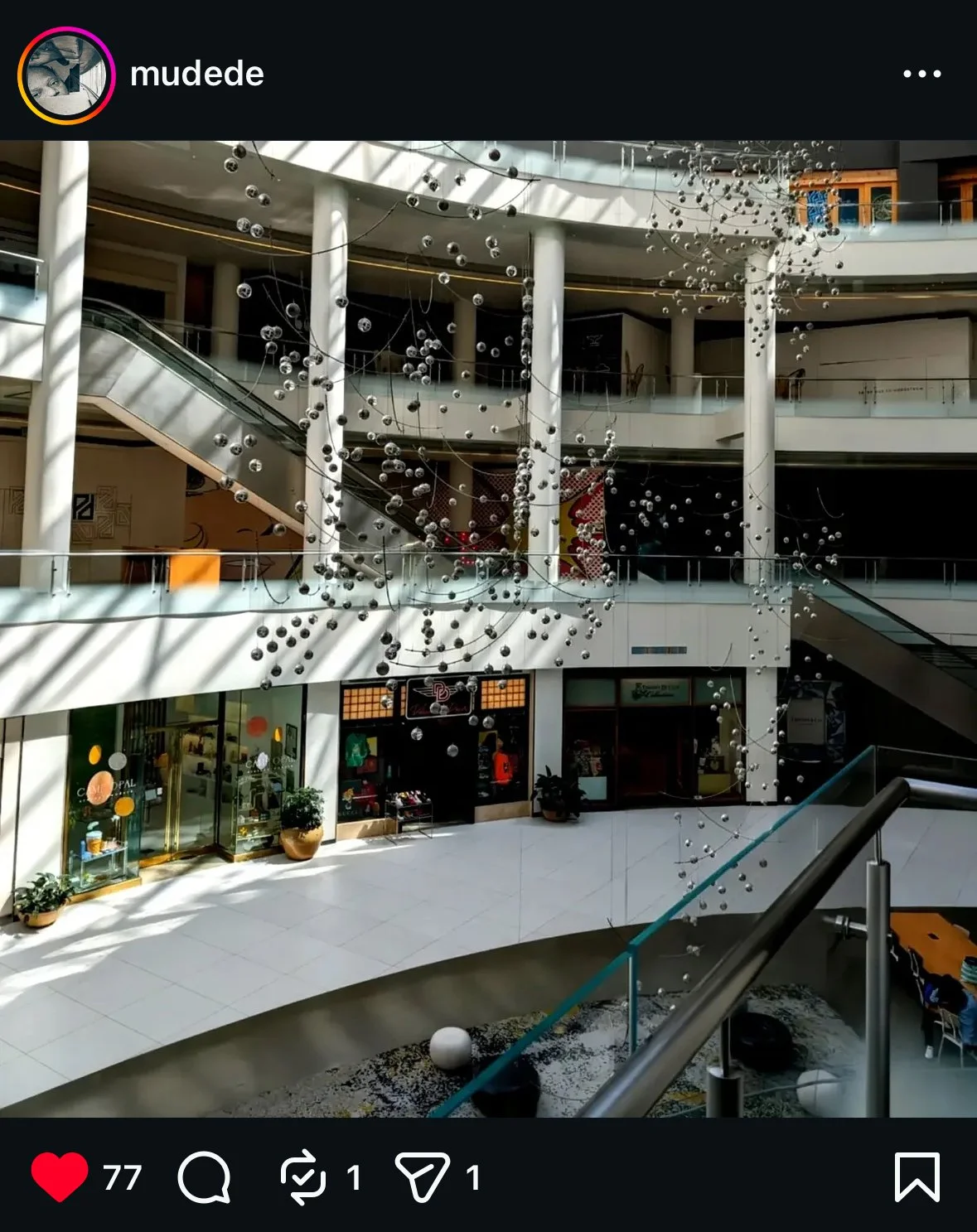
It isn’t exactly the same, yet I think the effort of Xispa with the “Pocket Critic” metaphorically mirrors the feeling of resistance and recoil I get from this doomly transformation at Pacific Place in the name of capitalism.
Now, Pocket Critic is free and all information and images of artists works are protected and deleted after the critique is pursued by a user. These are slightly comforting details, and there are some positive responses on their Instagram post from artists who have used it, but I am going to be really candid when I say, you will not catch me using this tool. It still feels precarious in light of all of the AI hallucinations and controversies over AI in general. I am not interested in AI “blowing smoke up my ass,” as one commenter reflects. Another artist comments poignantly, “Interesting, but it raises a real question: should simulated critique be applied to human work, or does it make more sense within AI-generated systems?”
Revisiting my opening thoughts to this conundrum, I am trying to be less tethered to my phone. And if I must be, I don’t want computer generated Jerry Saltz to be on the other end. No thanks.
////
SO, should anyone be interested in a conversation about this, enlighten me on why you love this tool, or asked for this tool, or help me organize a monthly critique session IRL…
Thanks for reading. Special thanks to xispa and Charles and Amanda for stimulating my thoughts from all angles.