Created: March 23, 2026 at 8:56 PM

Erin Elyse Burns

Erin Elyse Burns burns bright and fizzles slow in her exhibition Dead Reckoning at the Behnke Family Gallery at Cornish College of the Arts at Seattle University. I would also describe her as dazzling and confusing, so let me explain what I mean.

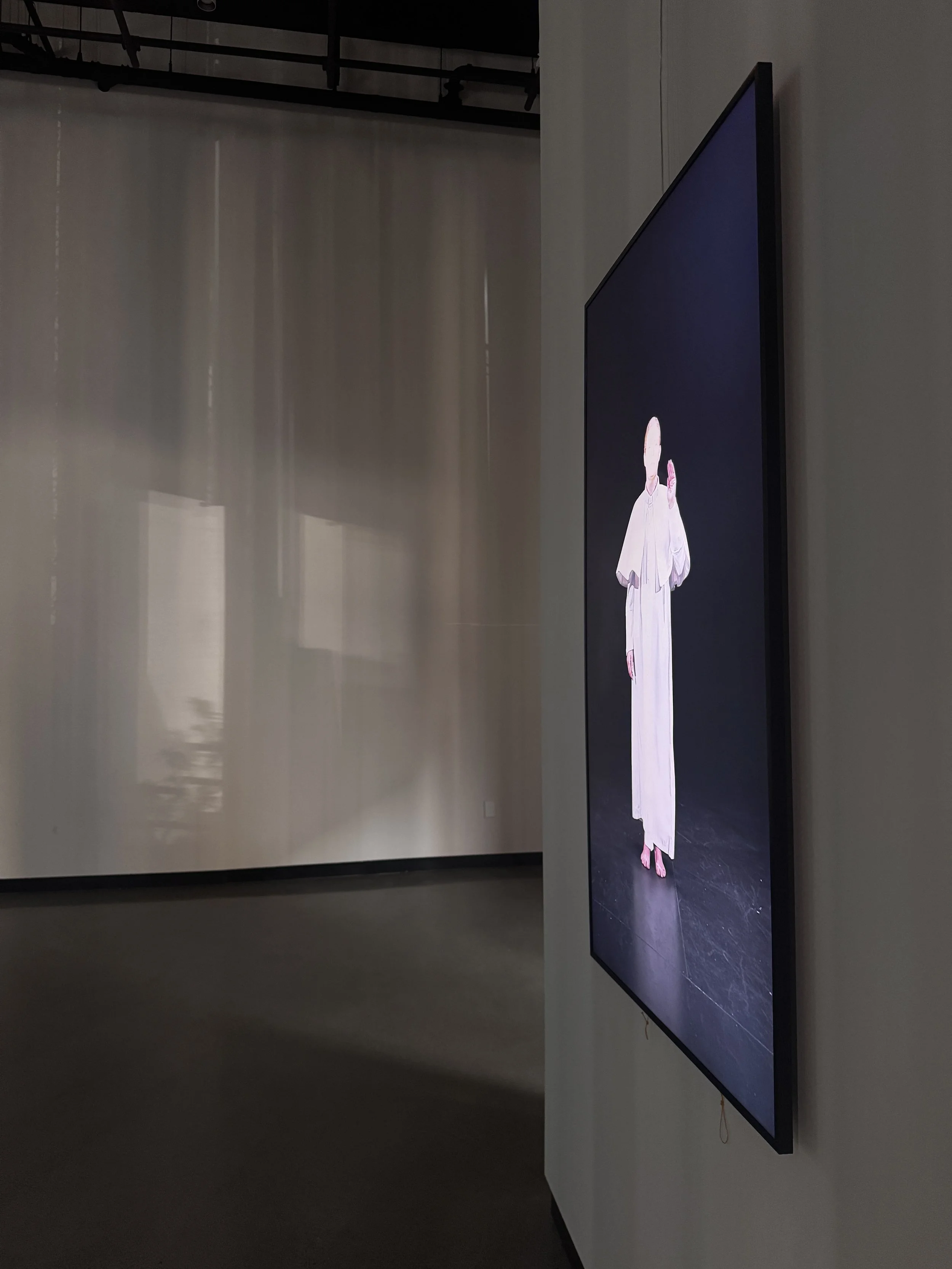
I am at the Behnke Family Gallery at Cornish (now part of Seattle U) for a bi-weekly SOIL member meeting and to witness the sabbatical work of Burns, a SOIL member, professor, and artist who has become a dear friend of mine. This is the first time I will be seeing a room full of her work; my prior context and knowledge is extremely thin. Walking into Dead Reckoning I am greeted by a flat screen, which I find out on the same night has been suspended from the ceiling. It was the first time someone had utilized that side of the column in the gallery. The work on the screen is The Seeker (priestly), a figure I know is Burns shrouded in a wonderfully disco-ball like garment, which I also found out that night was left behind by a student named Jessica Munoz-Palomo. This character gestures wide and conducts Hail Mary’s while welcoming in viewers. It sets a tone that is spiritual, mysterious and playful, what is around the corner of the girthy cement column is more serious, though.

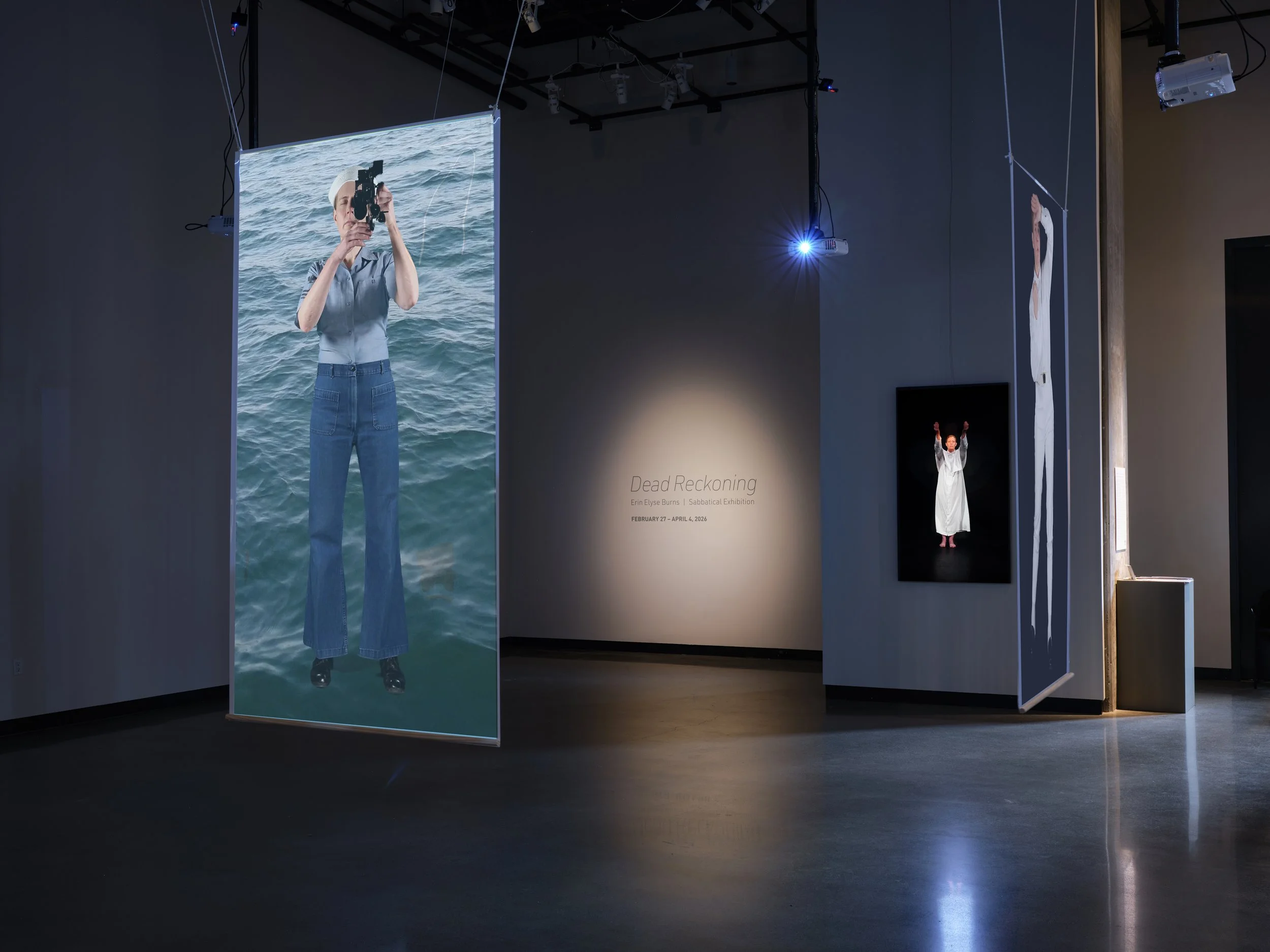
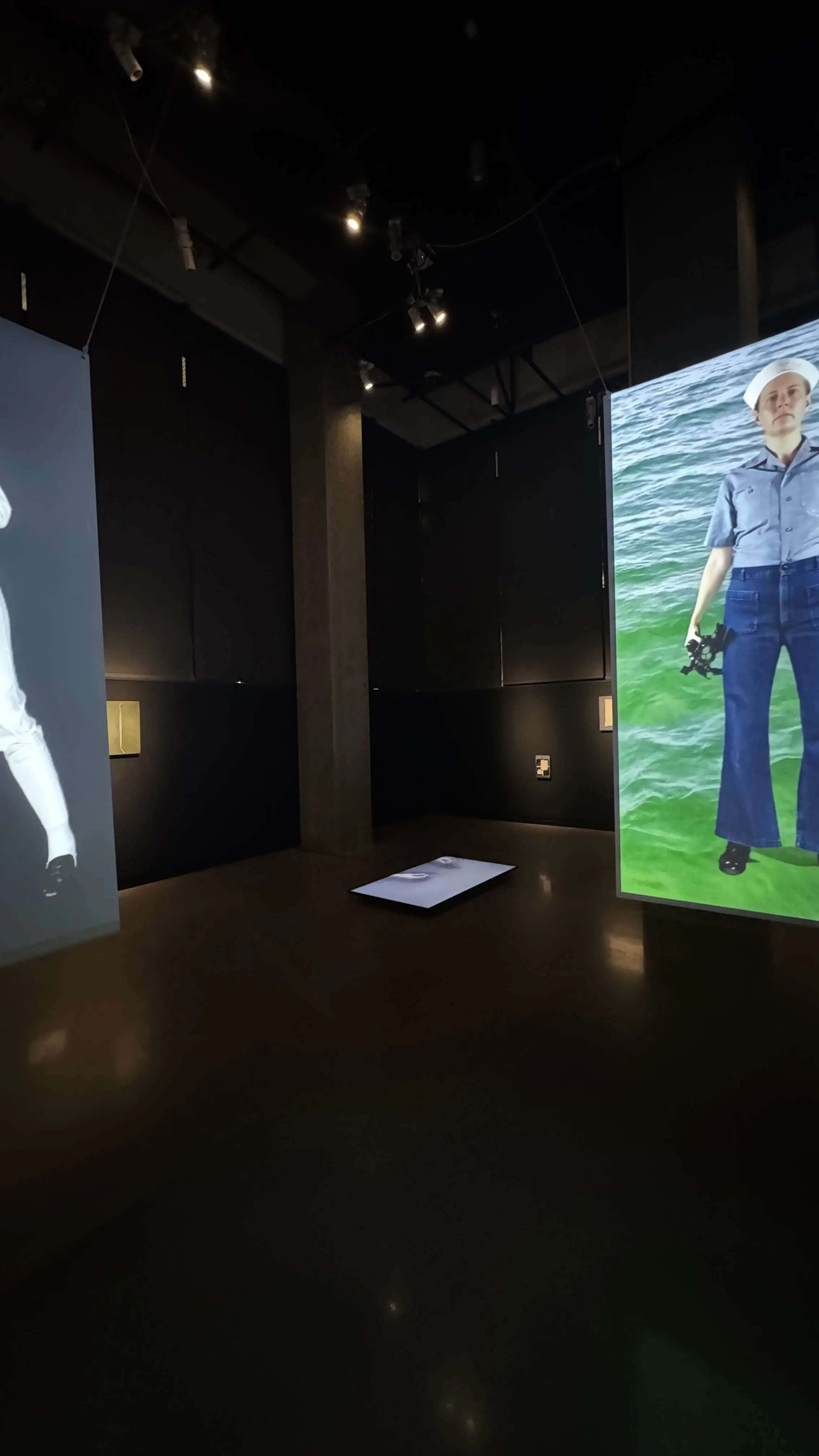
Entering the gallery the mumbling of voices grows louder and ricochets around the cavern-like space of cement and shaded monumental windows, which leak light and throw shadows across the wall when cars pass by. The repetitive rectangles accentuate the five additional screens displaying performances by Burns at a varying large scales. She is embodying a different character in each video. Looking up to them from the ground I lean into the repetitiveness of the documented performances like I am in a trance; the rumbling incoherent words filling the room aid in this.

The Seeker (priest) on the monitor faces The Navigator, who is in between The Constable and The Fighter, each character recons with Burns’ past in some way: the four generations of military men in the family, the impact of Catholicism, the landscape — it is all there, yet very simplified. Each scene is isolated in its repetitiveness. In the back corner of the gallery, as if on its own island, is Safe Handling, a choreography of movements Burns describes as going through the motions of accessing the thousands of files available to her about her family’s history documented in the Public Records Office of Northern Ireland. I remember I loved seeing this risky monitor on the floor at her solo show at SOIL many months prior; it had more impact to me when the chances of stepping on it were higher.

For our SOIL meeting we sat at the back of the gallery near the very neat and polished documentation of the records Burns journeyed to access. When the meeting concluded and we all returned to the center of the gallery I felt these unactivated works to fade into the background. They were more of a backdrop to the spotlight of the show.